Conceptual Framework
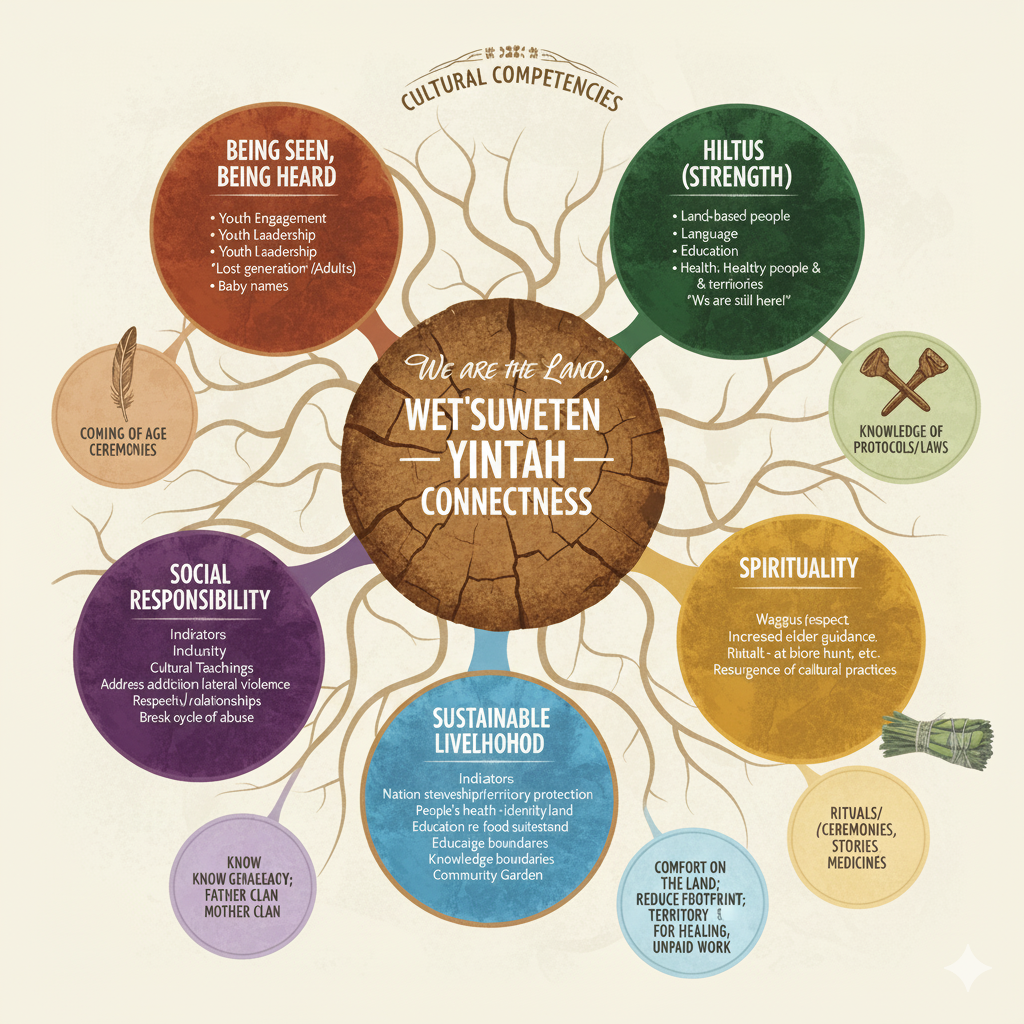
The Wet'suwet'en holistic wellness conceptual framework centers on Yinta (the land/territory), based on the philosophy that "we are the land and the land is us". It integrates traditional laws, hereditary governance, and five key themes—being seen/heard, strengths, spirituality, sustainable livelihood, and social responsibility—to promote comprehensive community well-being.
Key components of the Wet'suwet'en conceptual framework include:
-
Yinta (The Land):
The core of the framework, emphasizing the inseparable connection between the people, the land, animals, air, and watersheds. -
Five Key Themes:
- Being Seen/Being Heard: Acknowledging individual and collective identity.
- Hiltus (Strengths): Utilizing inherent cultural, social, and personal assets.
- Spirituality: Connection to, and respect for, the spiritual world.
- Sustainable Livelihood: Including land-based activities like fishing, hunting, and trapping.
- Social Responsibility: Obligations to community and territory.
-
Governance and Law:
The framework is deeply rooted in the authority of the 13 Hereditary Chiefs and the matrilineal house system, which manages the territory. -
Purpose:
It acts as a guide to restore cultural, social, health, educational, and economic well-being, often applied to modern contexts like child welfare services.
The framework serves to challenge colonial worldviews by embedding Wet'suwet'en laws and practices into contemporary life and decision-making.